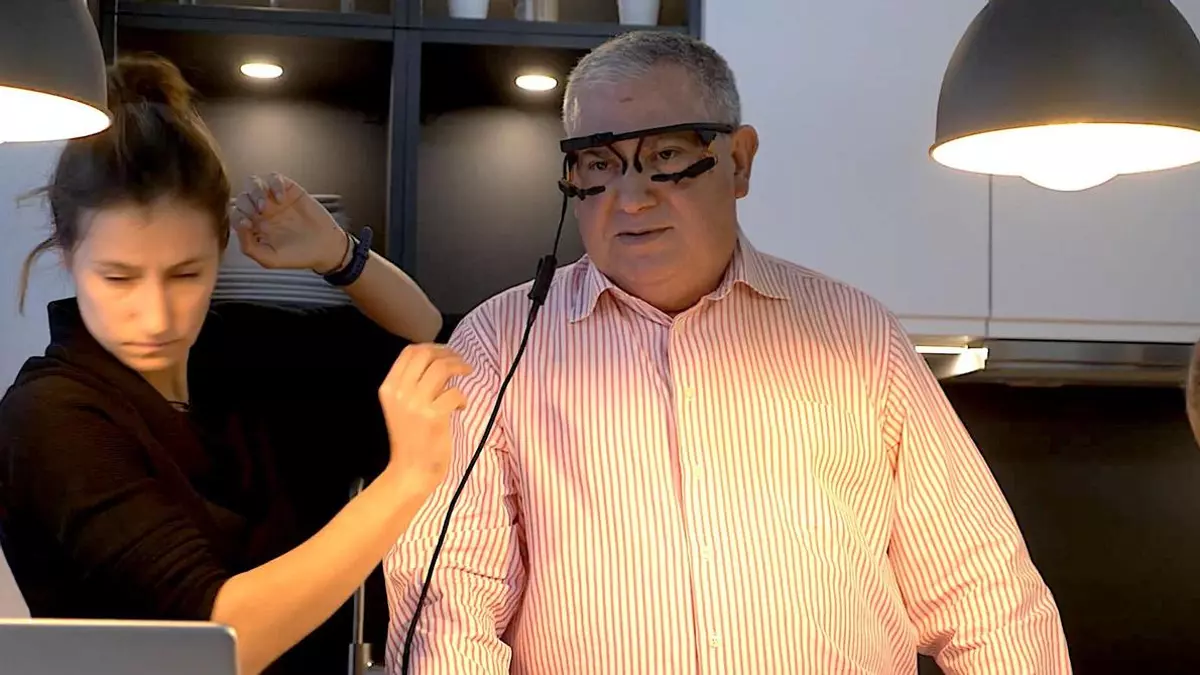
In recent days, numerous media have highlighted an unexpected milestone in clinical neuroscience: a blind man has partially regained vision following a surgical intervention performed as part of a clinical trial at the Miguel Hernández University of Elche (UMH). This case has attracted widespread attention due to its uniqueness and the new possibilities it opens for future therapies in severe blindness and optic nerve damage.
A trial designed to explore, not to cure
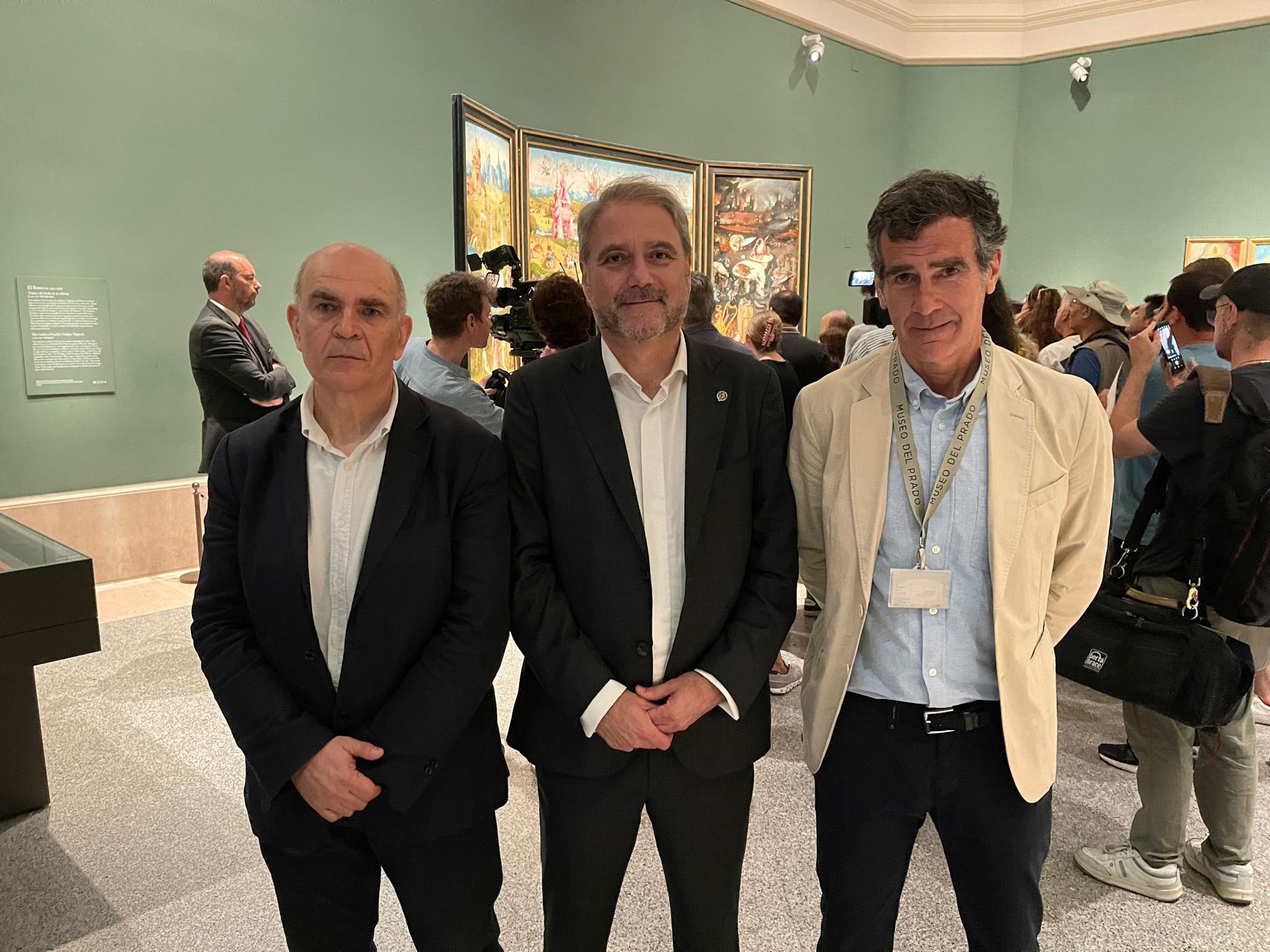
The protagonist of this story is Miguel Terol, who lost his sight irreversibly as a result of optic nerve injury and spent more than three years in complete darkness. In 2022, he decided to participate in a pioneering clinical trial led by researchers from the UMH Biomedical Neuroengineering Group and the Bidons Egara research chair. The study involved the intracortical implantation of a 100-microelectrode array in the primary visual cortex.
The original goal of the trial was to assess the feasibility of a cortical visual prosthesis based on electrical stimulation — not to restore natural vision.
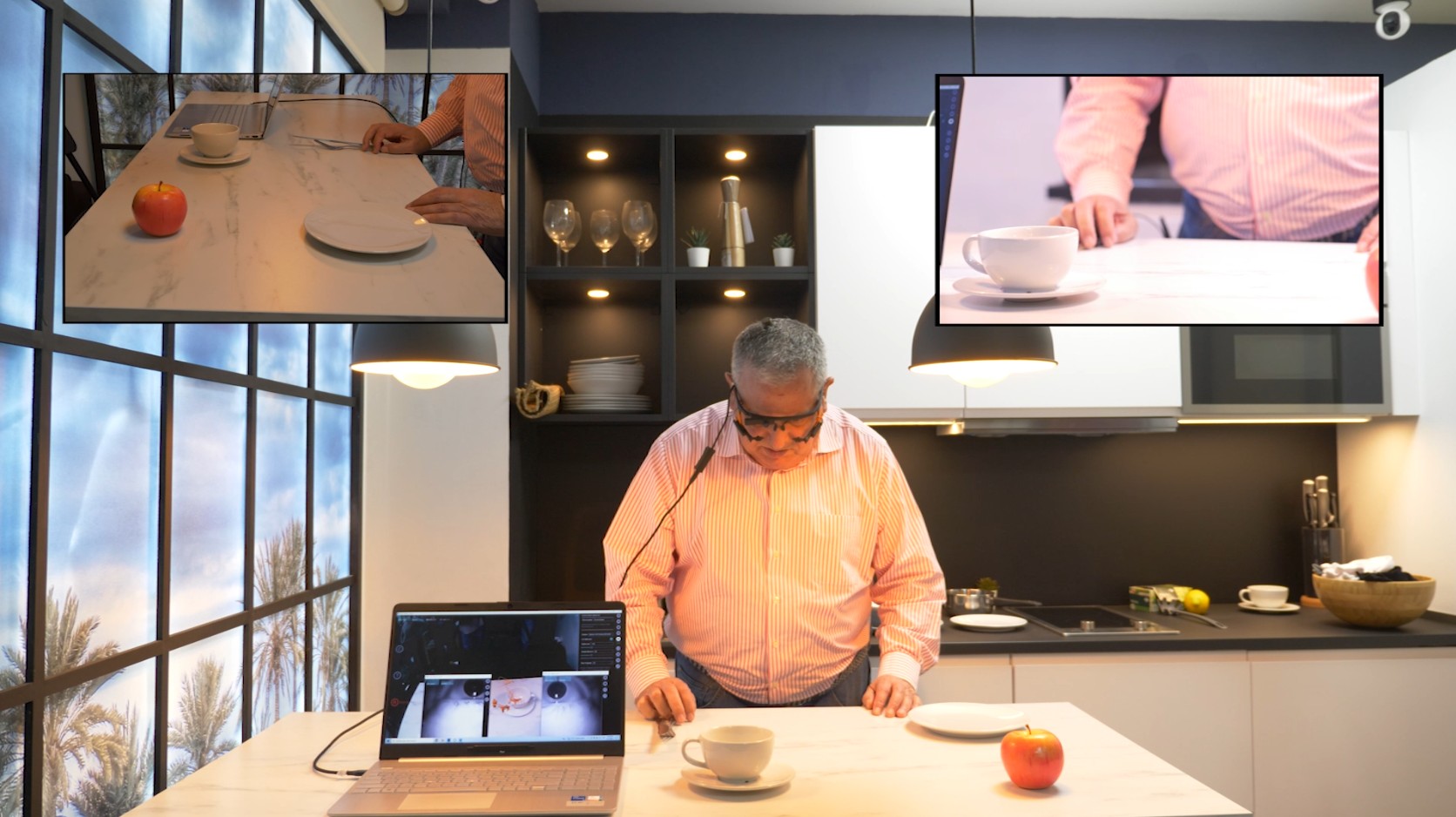
Only a few days after the procedure, Terol began to perceive light, movement, and shapes, eventually becoming able to recognize objects and read large characters. This phenomenon, described as a spontaneous and sustained recovery of part of his natural vision, has been regarded by scientists and journalists as highly unusual, since it was not anticipated in the experimental design.
From news story to scientific publication
Terol’s clinical experience has now been documented and rigorously analyzed in our recent publication in the international journal Brain Communications. Entitled “The unexpected sight: improvement of visual function following intracortical microstimulation of the human occipital cortex”, the article presents this case within the broader context of a clinical trial aimed at exploring new approaches to visual restoration through intracortical neurostimulation.
📄Full article here:
https://academic.oup.com/braincomms/article/8/1/fcaf504/8455384
What makes this case unique?
Although research on visual neuroprostheses is not new — our group has been developing brain stimulation technologies to generate artificial visual perceptions for several years — the natural recovery of vision after years of total blindness remains extraordinary. This finding raises fundamental questions about brain plasticity and the mechanisms of neural reorganization following severe damage to the visual system.
Previous scientific literature typically associates visual recovery with short periods after injury. What was observed in Terol goes far beyond what specialists would normally expect: his partial vision persisted even after the implant was removed, suggesting a deeper neural adaptation process than previously assumed.
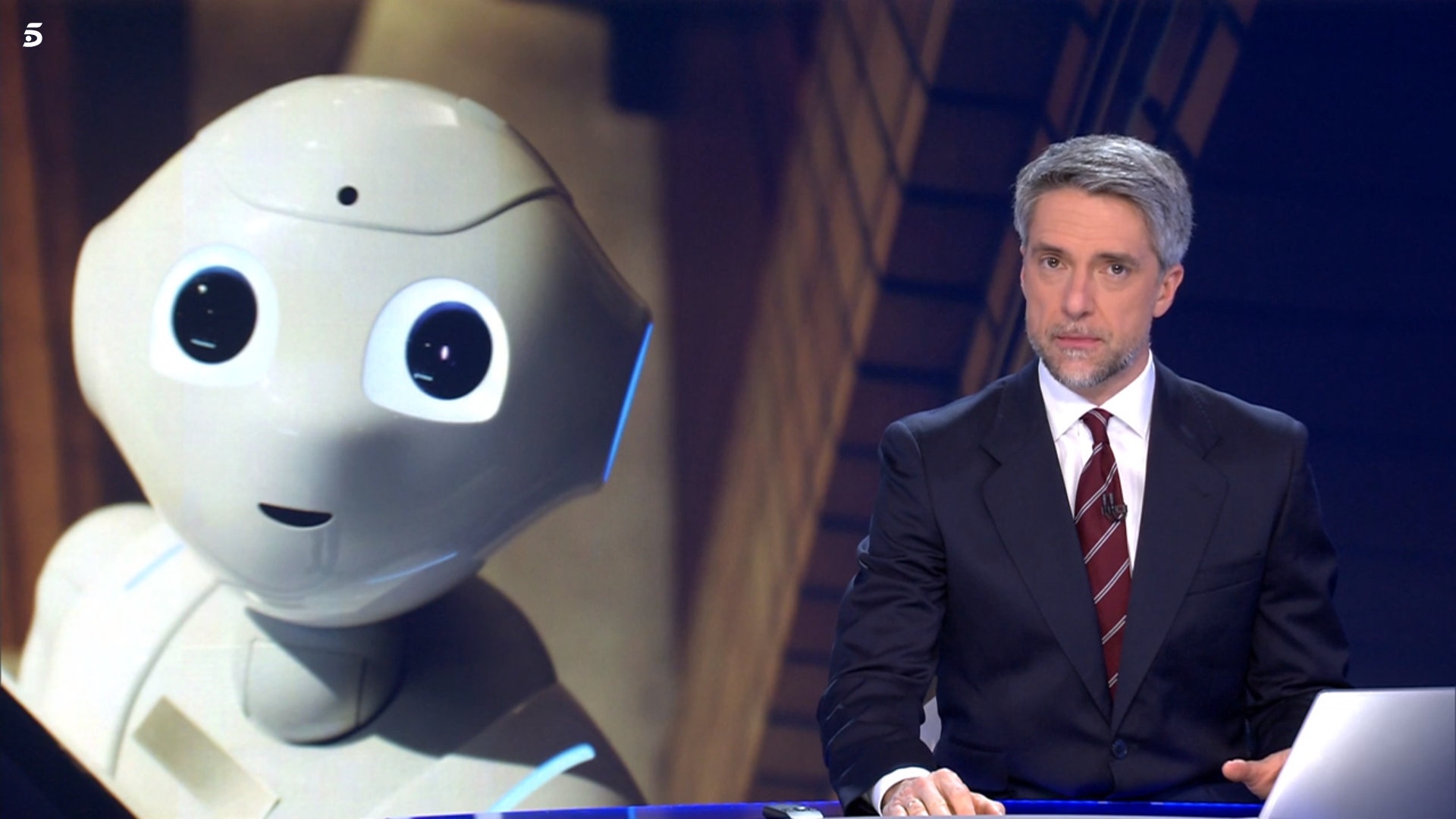
This case has not only captured the attention of the media — with coverage from outlets such as El País, RTVE, El Mundo, and La Razón — but also marks a turning point in our understanding of what may be possible with brain–machine interface technologies.
Although many questions remain unanswered and larger trials are still needed, this story — and our scientific publication in Brain Communications — represents a significant advance in medical neuroscience and sensory rehabilitation.